f = function(pars) {
  getAll(data, pars);
  Linfmn = exp(logLinfmn); logLinfsd = exp(loglogLinfsd);
  Linfs = exp(logLinfs); K = exp(logK );
         Sig = exp(logSig);
  nponds = length(Linfs);
   nages = length(A);
  predL = matrix(0, nrow = nages, ncol = nponds);
      # fill one column (pond) at a time:
  for (i in 1:nponds) { predL[, i] = Linfs[i] * (1 - exp(-K * (A - t0)));}
  nll = -sum(dnorm(x = L, mean = predL, sd = Sig, log = TRUE));
   nprand = -sum(dnorm(x = logLinfs, mean = logLinfmn, sd = logLinfsd, log = TRUE));
  jnll =  nll +  nprand;
  jnll;
}Software tools for Maximum Likelihood Estimation
Lesson 5 - The dark art of debugging code
Christopher Cahill
Associate Director
Associate Director
14 December 2023
Troubleshooting code as a skill that can be taught, learned, and mastered

Outline
- The origins of the bug 🐛🐛🐛
Outline
- The origins of the bug 🐛🐛🐛
- A general workflow for debugging code
Outline
- The origins of the bug 🐛🐛🐛
- A general workflow for debugging code
- Specifically we want to think about how we might:
Outline
- The origins of the bug 🐛🐛🐛
- A general workflow for debugging code
- Specifically we want to think about how we might:
- Write fewer bugs
- Reproduce bugs
- Locate bugs
- Fix bugs
Outline
- The origins of the bug 🐛🐛🐛
- A general workflow for debugging code
- Specifically we want to think about how we might:
- Write fewer bugs
- Reproduce bugs
- Locate bugs
- Fix bugs
- Introduce a few useful tools that help with this workflow
stylerlibrary andbrowser()
Outline
- The origins of the bug 🐛🐛🐛
- A general workflow for debugging code
- Specifically we want to think about how we might:
- Write fewer bugs
- Reproduce bugs
- Locate bugs
- Fix bugs
- Introduce a few useful tools that help with this workflow
stylerlibrary andbrowser()
- Work through some of examples
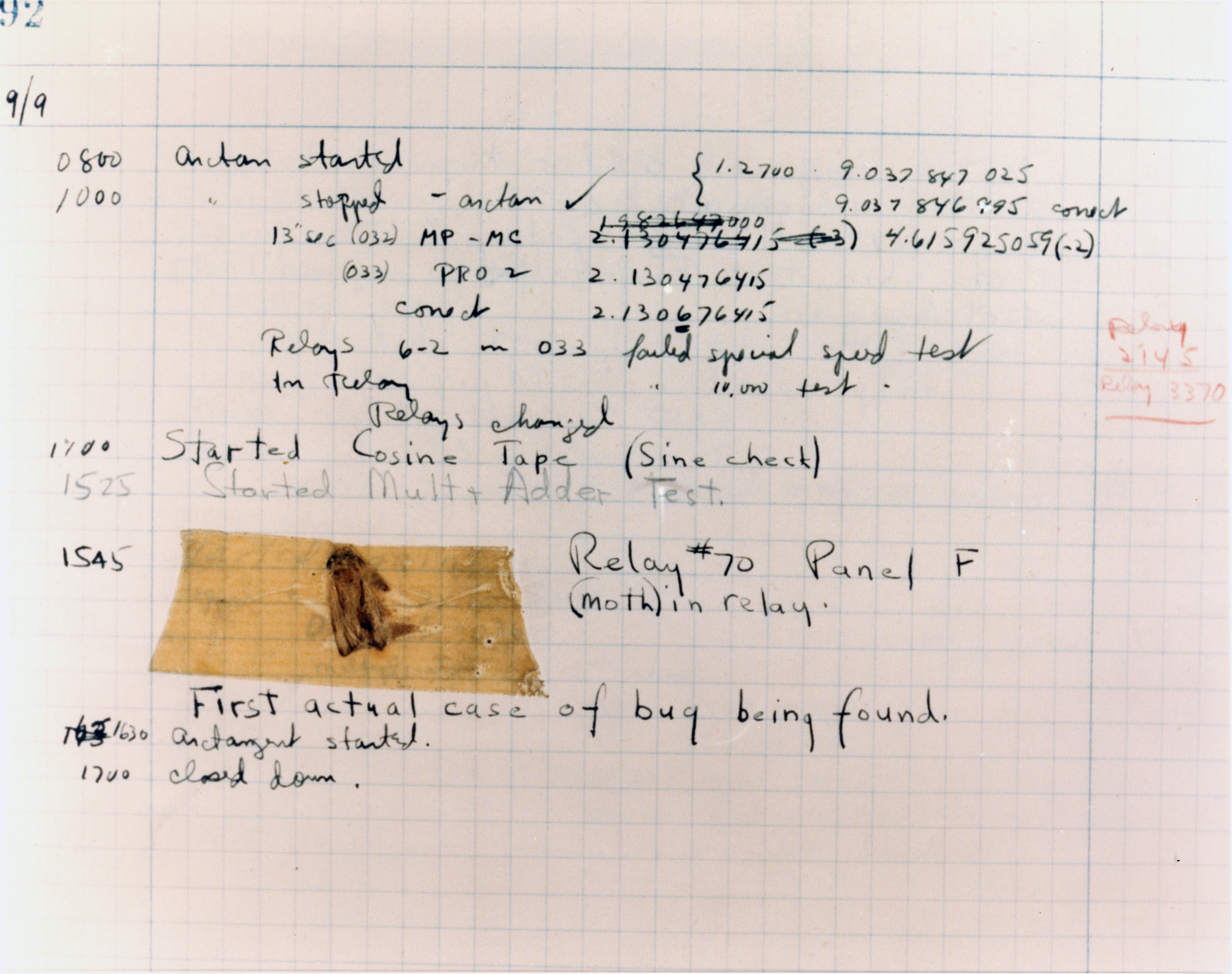
The original sin (bug)
The first bug 🐛
Step 1: Write fewer bugs
Follow a consistent style
Follow a consistent style
- Good coding style is like correct punctuation: you can manage without it, butitsureMakestHingseaSiertoreAdWHYgodWHY
Follow a consistent style
- Good coding style is like correct punctuation: you can manage without it, butitsureMakestHingseaSiertoreAdWHYgodWHY
- The importance of adopting a consistent style cannot be stressed enough
Follow a consistent style
- Good coding style is like correct punctuation: you can manage without it, butitsureMakestHingseaSiertoreAdWHYgodWHY
- The importance of adopting a consistent style cannot be stressed enough
- QFC trying to follow the tidyverse style guide
Follow a consistent style
- Good coding style is like correct punctuation: you can manage without it, butitsureMakestHingseaSiertoreAdWHYgodWHY
- The importance of adopting a consistent style cannot be stressed enough
- QFC trying to follow the tidyverse style guide
- Most things lower case and words separated by underscores
Follow a consistent style
- Good coding style is like correct punctuation: you can manage without it, butitsureMakestHingseaSiertoreAdWHYgodWHY
- The importance of adopting a consistent style cannot be stressed enough
- QFC trying to follow the tidyverse style guide
- Most things lower case and words separated by underscores
- Implemented via the Styler library
Follow a consistent style
- Good coding style is like correct punctuation: you can manage without it, butitsureMakestHingseaSiertoreAdWHYgodWHY
- The importance of adopting a consistent style cannot be stressed enough
- QFC trying to follow the tidyverse style guide
- Most things lower case and words separated by underscores
- Implemented via the Styler library
- Why care about style?
Follow a consistent style
- Good coding style is like correct punctuation: you can manage without it, butitsureMakestHingseaSiertoreAdWHYgodWHY
- The importance of adopting a consistent style cannot be stressed enough
- QFC trying to follow the tidyverse style guide
- Most things lower case and words separated by underscores
- Implemented via the Styler library
- Why care about style?
- Consistent naming conventions, indendation, and spacing help us train our eyes to spot bugs
An example program that you get from a collaborator
An example program
- Make it pretty via
styler()
f <- function(pars) {
  getAll(data, pars)
  Linfmn <- exp(logLinfmn)
  logLinfsd <- exp(loglogLinfsd)
  Linfs <- exp(logLinfs)
  K <- exp(logK)
  Sig <- exp(logSig)
  nponds <- length(Linfs)
  nages <- length(A)
  predL <- matrix(0, nrow = nages, ncol = nponds)
  # fill one column (pond) at a time:
  for (i in 1:nponds) {
    predL[, i] <- Linfs[i] * (1 - exp(-K * (A - t0)))
  }
  nll <- -sum(dnorm(x = L, mean = predL, sd = Sig, log = TRUE))
  nprand <- -sum(dnorm(x = logLinfs, mean = logLinfmn, sd = logLinfsd, log = TRUE))
  jnll <- nll + nprand
  jnll
}
Step 2: Reproduce the bug
Reproduce the bug
- Reproducing a bug allows us to better understand why the program went wrong
“Debugging is like being the detective in a crime movie where you are also the murderer.” - Filipe Fortes
Reproduce the bug
- Reproducing a bug allows us to better understand why the program went wrong
- Pay attention to versions of R and packages
“Debugging is like being the detective in a crime movie where you are also the murderer.” - Filipe Fortes
Reproduce the bug
- Reproducing a bug allows us to better understand why the program went wrong
- Pay attention to versions of R and packages
- Pay attention to warnings, errors, and other messages
“Debugging is like being the detective in a crime movie where you are also the murderer.” - Filipe Fortes
Reproduce the bug
- Reproducing a bug allows us to better understand why the program went wrong
- Pay attention to versions of R and packages
- Pay attention to warnings, errors, and other messages
- Emphasis here on pay attention
“Debugging is like being the detective in a crime movie where you are also the murderer.” - Filipe Fortes
Reproduce the bug
- Reproducing a bug allows us to better understand why the program went wrong
- Pay attention to versions of R and packages
- Pay attention to warnings, errors, and other messages
- Emphasis here on pay attention
- ISOLATE THE BUG
“Debugging is like being the detective in a crime movie where you are also the murderer.” - Filipe Fortes
Determining versions in R
Determining versions in R
R version 4.5.0 (2025-04-11 ucrt)
Platform: x86_64-w64-mingw32/x64
Running under: Windows 11 x64 (build 26100)

Matrix products: default
  LAPACK version 3.12.0

locale:
[1] LC_COLLATE=English_United States.utf8
[2] LC_CTYPE=English_United States.utf8
[3] LC_MONETARY=English_United States.utf8
[4] LC_NUMERIC=C
[5] LC_TIME=English_United States.utf8

time zone: America/New_York
tzcode source: internal

attached base packages:
[1] stats     graphics  grDevices utils     datasets  methods   base

loaded via a namespace (and not attached):
 [1] compiler_4.5.0    fastmap_1.2.0     cli_3.6.4         tools_4.5.0
 [5] htmltools_0.5.8.1 rstudioapi_0.17.1 yaml_2.3.10       rmarkdown_2.29
 [9] knitr_1.50        jsonlite_2.0.0    xfun_0.52         digest_0.6.37
[13] rlang_1.1.6       evaluate_1.0.3
Step 3: Locate the bug 🐛
Manual debugging
Manual debugging
- What most people are used to, links back to Jim’s bit about understanding the math
Manual debugging
- What most people are used to, links back to Jim’s bit about understanding the math
- There are smart and effective ways to do this
Manual debugging
- What most people are used to, links back to Jim’s bit about understanding the math
- There are smart and effective ways to do this
- There are also stupid ways to do this
Formal debugging tools in R
- There are several, but I am going to teach you
browser()
Formal debugging tools in R
- There are several, but I am going to teach you
browser() browser()gives us a way to interrupt the execution of an expression and allow the inspection of the environment
Formal debugging tools in R
- There are several, but I am going to teach you
browser() browser()gives us a way to interrupt the execution of an expression and allow the inspection of the environment- When I say environment here, think local environment inside a function
The downside of browser()
- Have to manually add it and then remove it from your code later on
Step 4: Fix the bug
Exorcise the bug (demon)
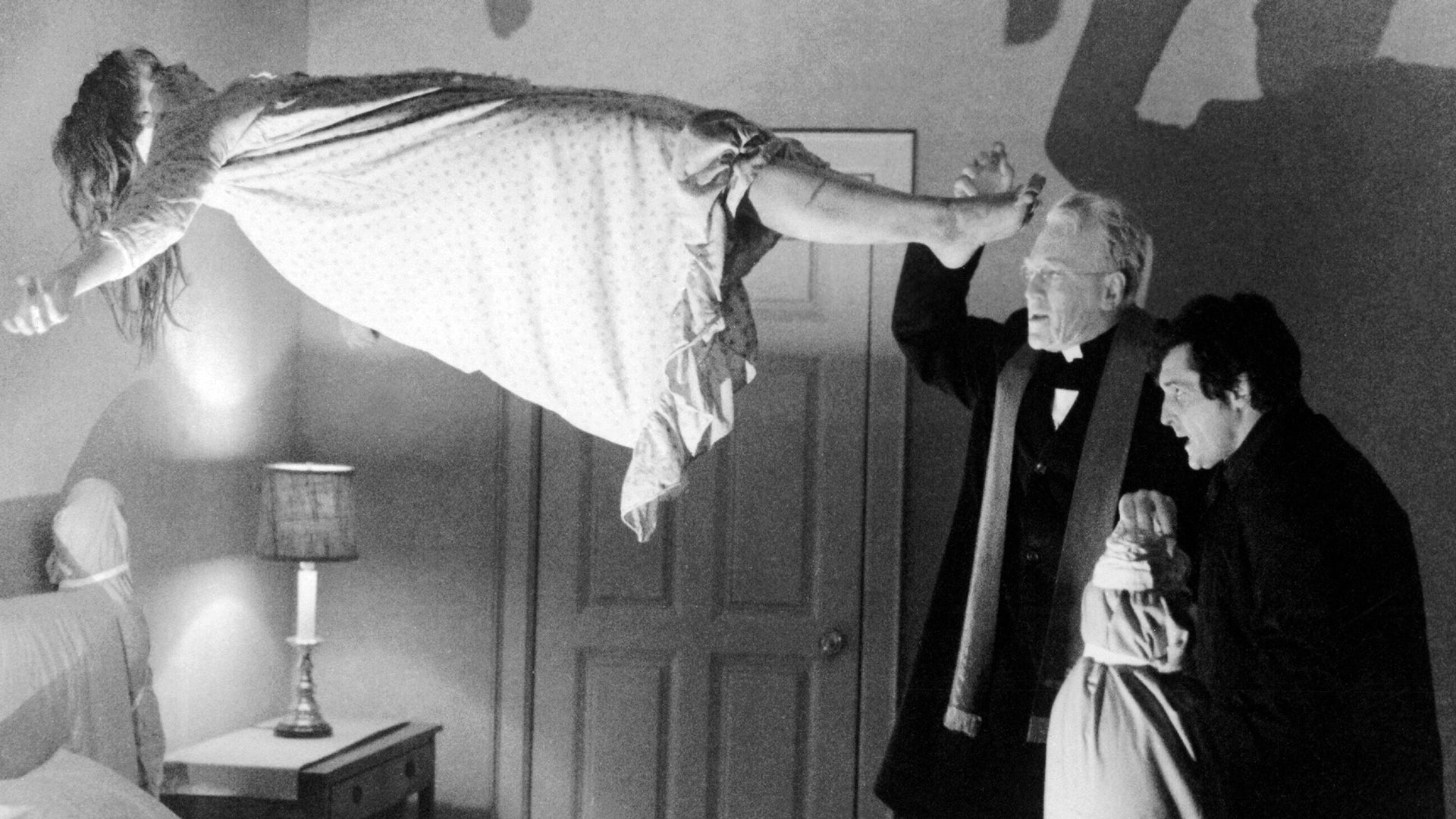
My strategy for debugging code
- Format the code in a sensible and consistent way
- Reproduce and isolate the bug, noting software versions 2b. Locate the bug using debugging tools
- Explore the unexpected behavior
- Conduct an exorcism to remove the demon
- Make the code more robust for future users
Simulation as a critical debugging tool
- All of the bugs we have discussed so far are the ones that cause errors
- These are not the only bugs
- The worst bugs allow code to run but unknowingly return incorrect answers
- Maximum likelihood methods have a theoretical property of consistency, which you can use to your advantage
- A word to the wise: most of the bugs Lisa Chong (QFC postdoc) is finding in Great Lakes assessment models are of this type 💀💀👻
Wikipedia link on the consistency property of the Maximum Likelihood Estimator
References
Kasper Kristensen, Anders Nielsen, Casper W. Berg, Hans Skaug, Bradley M. Bell. 2016. TMB: Automatic Differentiation and Laplace Approximation. Journal of Statistical Software, 70(5), 1-21. doi:10.18637/jss.v070.i05
Kristensen K. 2023. RTMB: R Bindings for TMB. R package version 1.0, https://github.com/kaskr/RTMB